An integrated steel plant in Jamshedpur was struggling with chronic airborne dust levels in its grinding, rolling and finishing bays — exceeding CPCB norms and creating serious health and compliance risks for workers. Roots Enviro Systems was engaged to design, supply and commission a complete dust extraction and wet collection system across the affected production areas.
The Challeng
The plant's existing ventilation infrastructure was over 15 years old and severely undersized for the expanded production capacity. Dust levels in the grinding bay regularly exceeded 25 mg/m³ — more than five times the permissible limit of 5 mg/m³ under CPCB norms. Key issues included:
- No localised extraction at grinding and cutting stations — dust dispersed freely throughout the bay
- Existing roof ventilators were insufficient in number and poorly positioned for effective cross-ventilation
- Water mist suppression had been tried but created slippery floors and humidity issues without adequately reducing airborne particulate
- The rolling mill discharge area generated coarse metallic dust not suitable for dry filtration
- The client required full compliance within 3 months to address a pending CPCB inspection
Our Approach
After a detailed site survey and airflow modelling, our engineering team designed a zoned extraction strategy addressing each source independently:
Source Capture at Grinding Stations
Installed close-capture hood assemblies at each grinding and cutting station connected to a common extraction duct. Four Roots Enviro SISW centrifugal fans (each 45,000 m³/hr) draw captured dust to a bank of wet scrubbers.
Wet Scrubber Collection
Six Model-48 wet collectors were installed to handle the moisture-laden particulate from the rolling mill discharge area — capturing coarse metallic dust that would otherwise block dry filtration media.
General Bay Ventilation
Two additional DIDW centrifugal fans were added to the roof-mounted general ventilation circuit, increasing total air change rate from 4 ACH to 12 ACH and maintaining negative pressure in the grinding bay relative to adjacent areas.
Ductwork & Controls
All ductwork was fabricated from 3mm GS steel with epoxy-primer lining for corrosion resistance. Blast-gate dampers allow individual stations to be isolated for maintenance without shutting down the entire system.
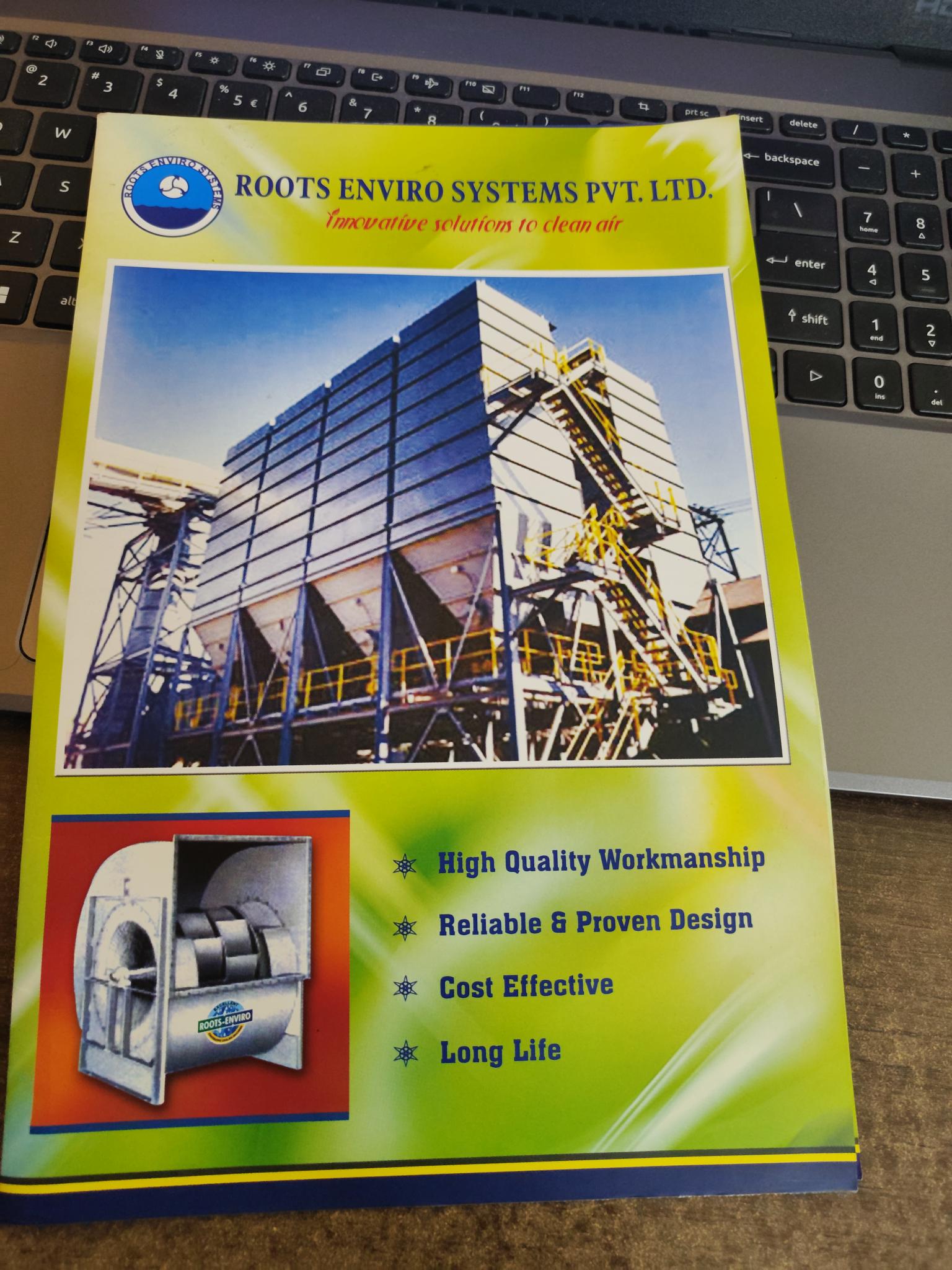 Centrifugal fan installation at the grinding bay extraction header — one of six fan units commissioned at this facility
Results & Outcomes
Post-commissioning air quality measurements conducted by an independent third-party laboratory confirmed the system’s performance:
- Dust concentration reduced from 26.4 mg/m³ to 2.1 mg/m³ — a 92% reduction, well below the CPCB limit of 5 mg/m³
- Full CPCB compliance achieved, clearing the pending regulatory inspection
- Worker absenteeism due to respiratory complaints dropped by 67% in the six months following commissioning
- Rolling mill availability improved as wet collector maintenance cycles were aligned with planned downtime
- The project was completed and handed over in 14 weeks — within the client’s compliance deadline
— Plant Manager, Steel Manufacturing Facility, Jamshedpur
Products Used in This Project
- Centrifugal Fans (SISW & DIDW) — 6 units, 30,000–45,000 m³/hr each, GS steel construction with epoxy finish
- Wet Scrubbers (Model 48) — 6 units, handling moisture-laden metallic particulate from rolling mill discharge
- Close-Capture Hoods — 18 custom-fabricated hoods at individual grinding and cutting stations
- Interconnecting Ductwork — 3mm GS steel, epoxy-primer lined, with blast-gate isolation dampers
.jpg)